Microsoft AI Product Convergence
2024 · Internal Project
Team: Microsoft AI Brand & Design Systems
Role: Creative Design Lead — UX/UI, Design Systems, Storytelling
Background
Currently, Microsoft AI spans multiple brands with distinct visual languages and a decentralized architecture. While the products are functionally connected, the lack of visual cohesion makes the ecosystem feel fragmented and disconnected to customers.
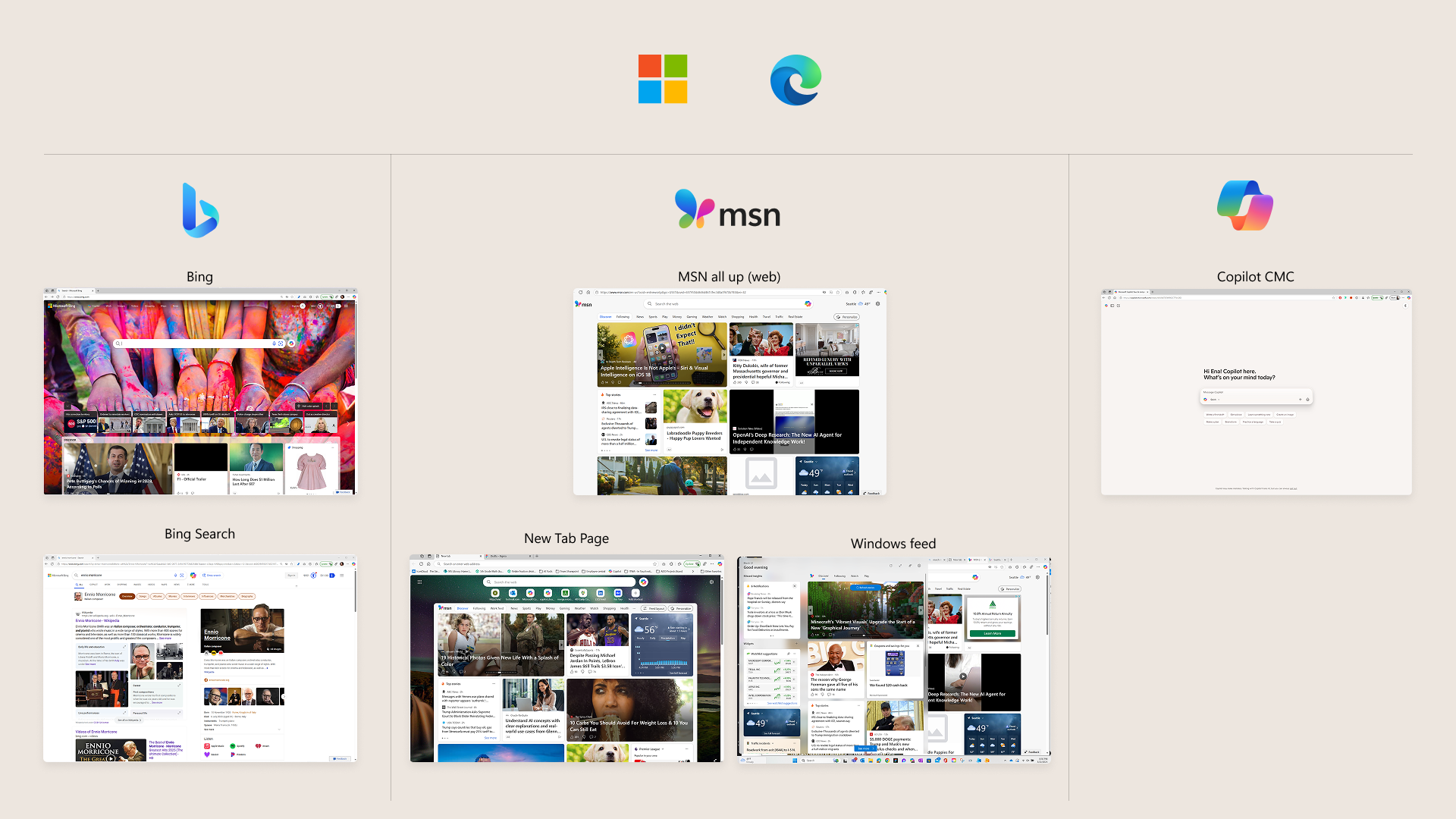
Hypothesis
Unifying our core experiences—New Tab Page, Search, MSN News, and Windows Feed—under a single brand will create a more cohesive and intuitive ecosystem, strengthening brand recognition and driving increased daily active usage (DAU).
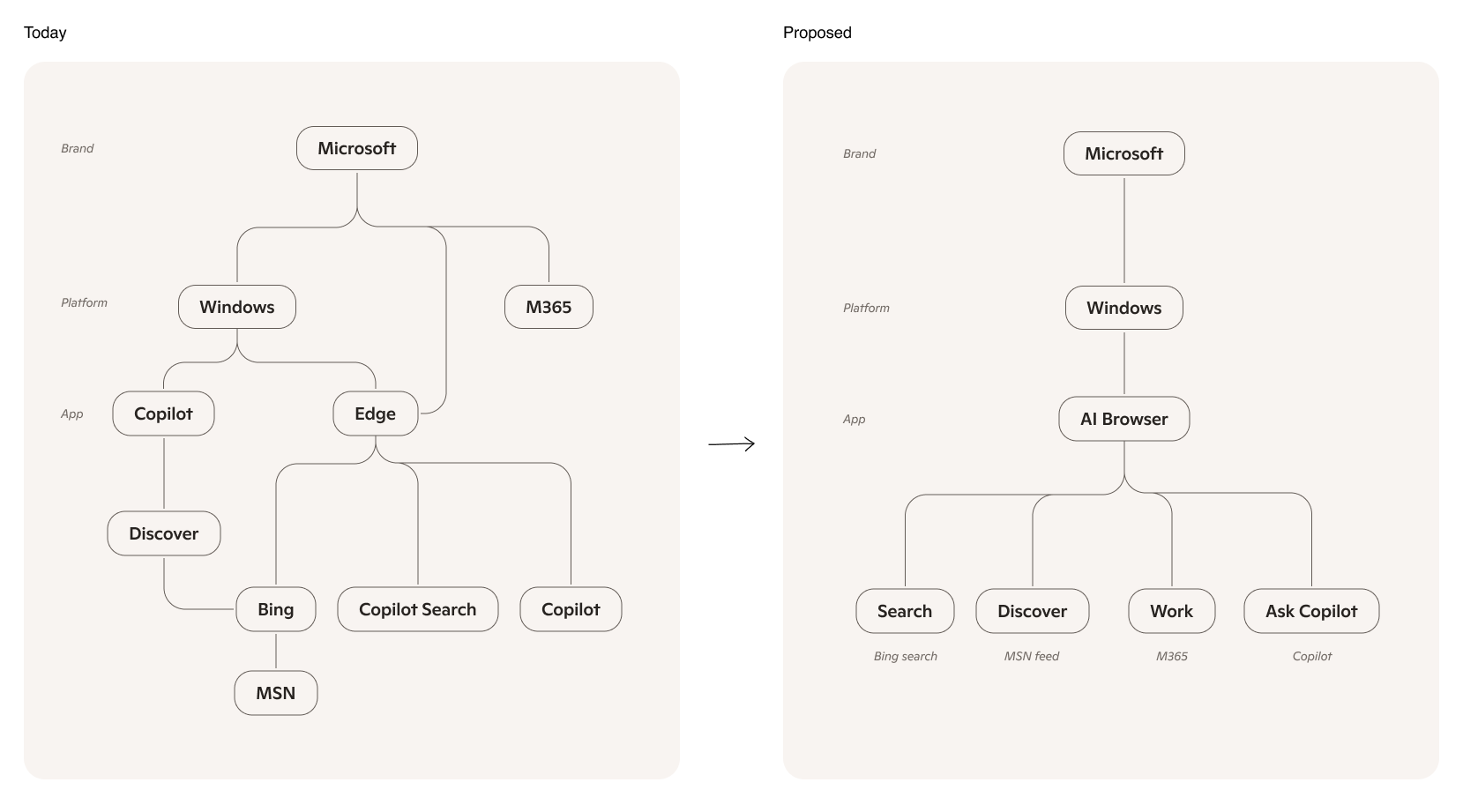
UX Architecture
The proposed architecture positions Copilot as the single entry point to the Microsoft ecosystem, shifting the focus from individual brands to users’ jobs to be done.
User Flow
We created an ideal user flow to demonstrate the proposed UX architecture, positioning Copilot as the single entry point. Users begin with one unified composer for search, questions, and discovery, and are seamlessly directed to Search or Copilot chat based on intent rather than brand boundaries.
Key Considerations
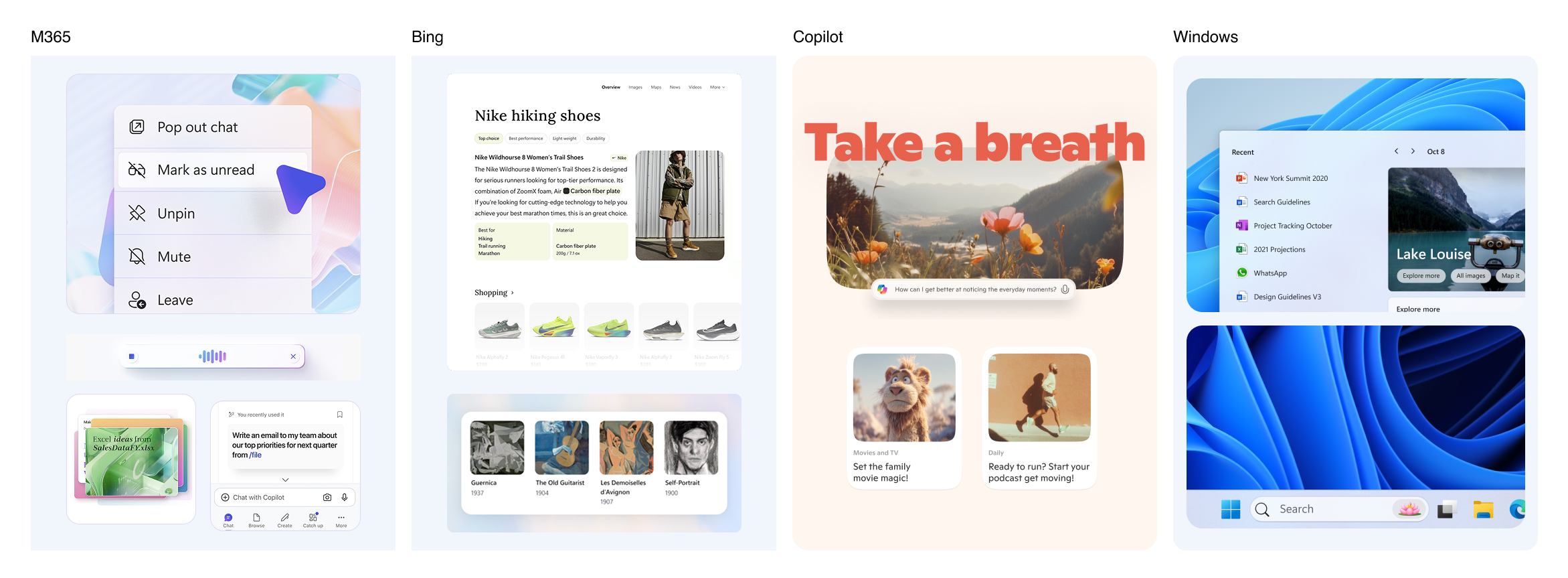
Unified Visual Language
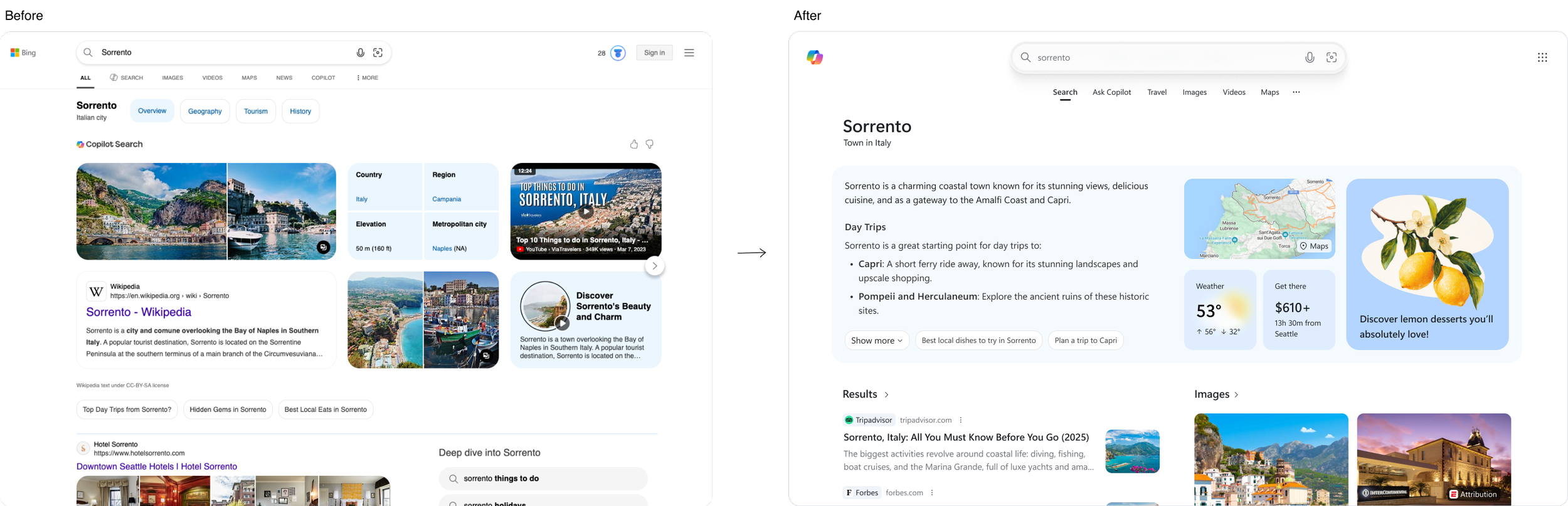
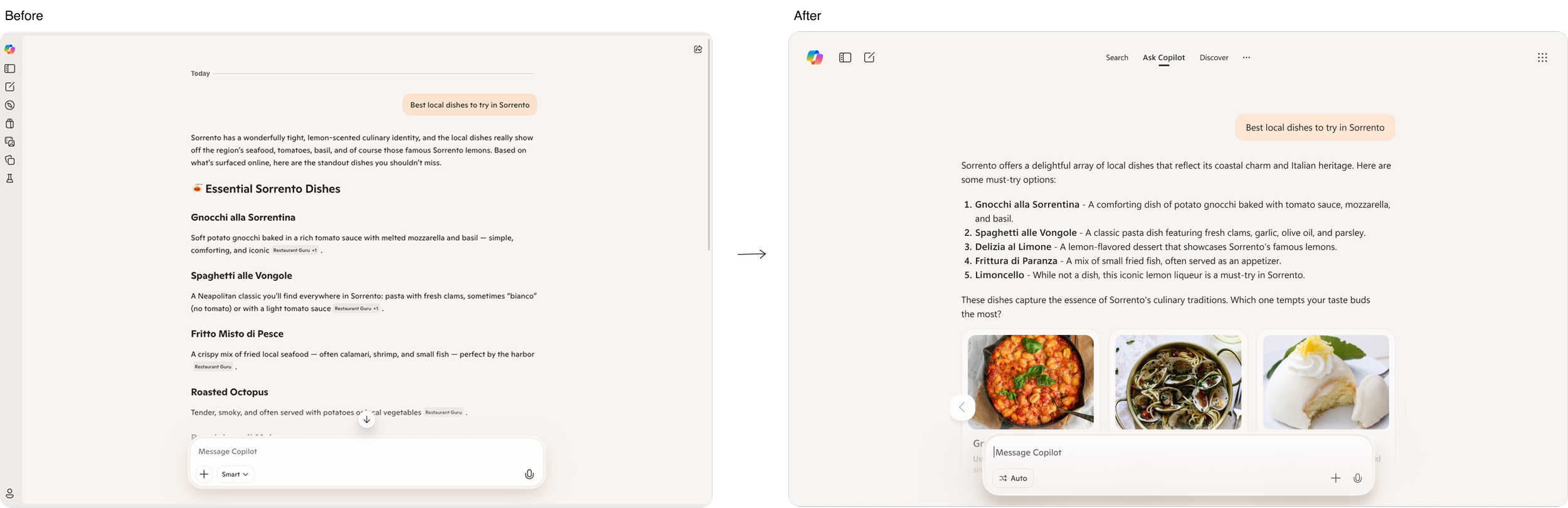
Microsoft’s ecosystem currently spans multiple visual languages, leading to a fragmented user experience. This exercise aimed to unify the visual system and simplify the UI, allowing users to focus on getting work done rather than navigating brand differences.
Copilot served as the foundational brand—bringing warmth and humanity—while elements from other products were integrated to support scalability across diverse productivity scenarios.
Before/After
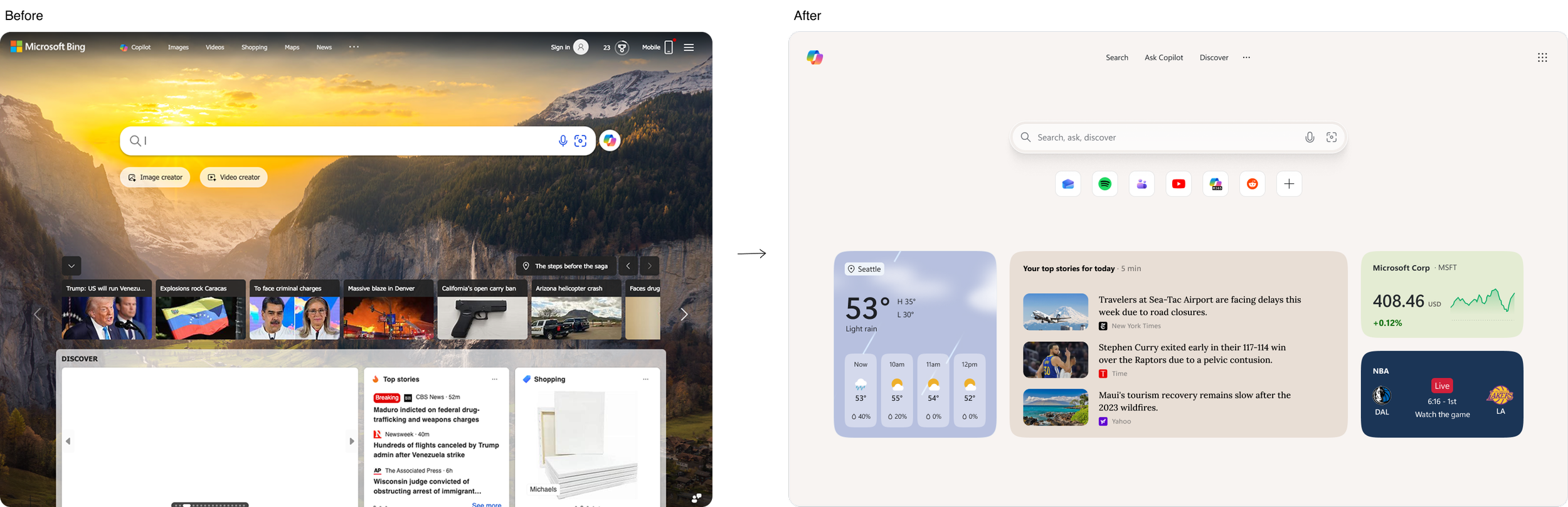
Unified Navigation and Composer
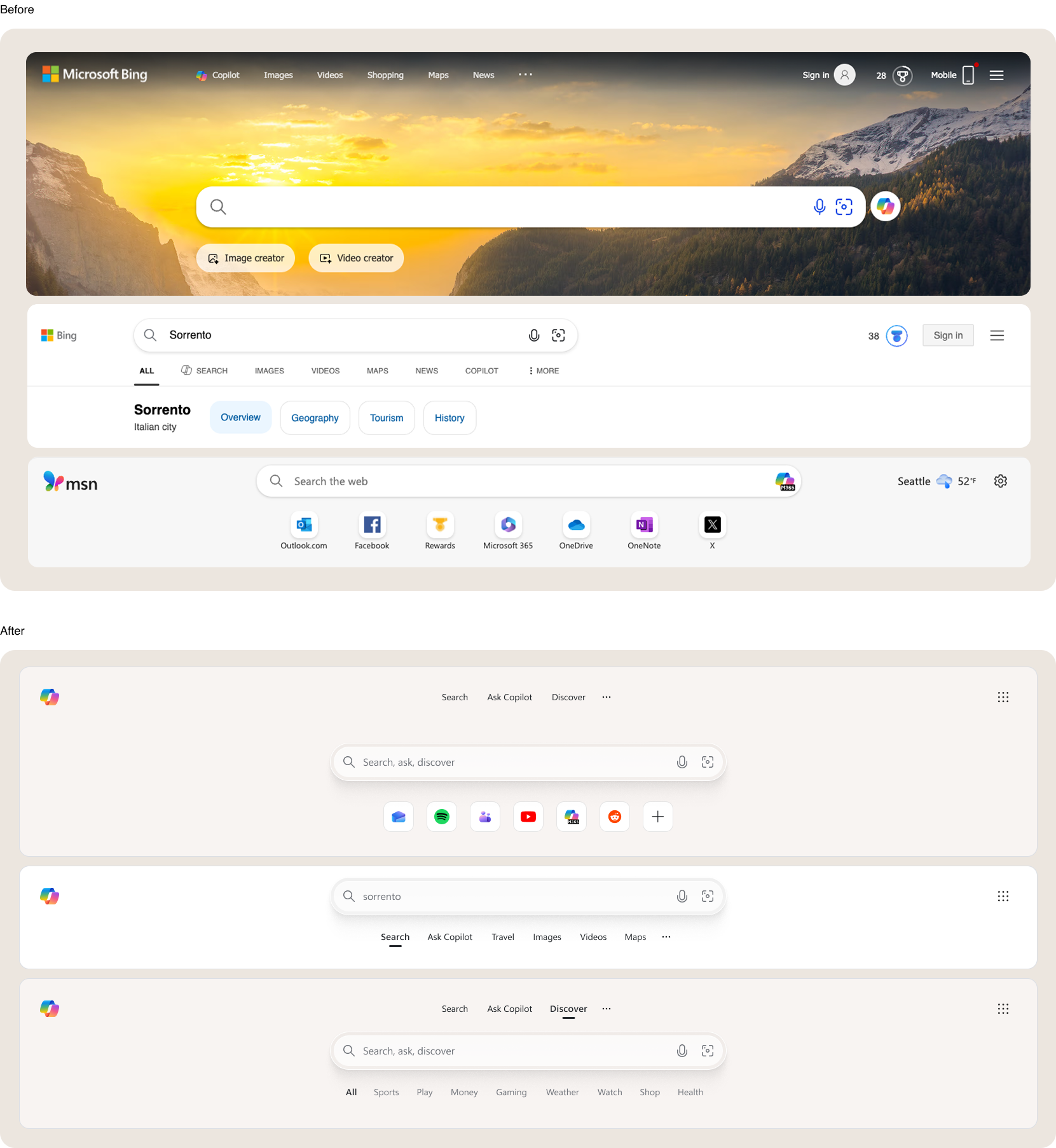
Currently, each product uses its own navigation and logo, which makes experiences feel separate and creates friction when moving between them. By introducing a unified navigation with a consistent logo, users can move seamlessly across experiences without feeling like they are entering a new or unfamiliar brand.
Validation
We conducted user research with 15 participants across diverse age groups and regions. Participants consistently found the experience easier to navigate and more effective at helping them accomplish their jobs to be done.
As this work was intentionally exploratory and conceptual, the next phase is to align on a product timeline and partner with individual product teams to drive deeper validation and path-to-production decisions.